
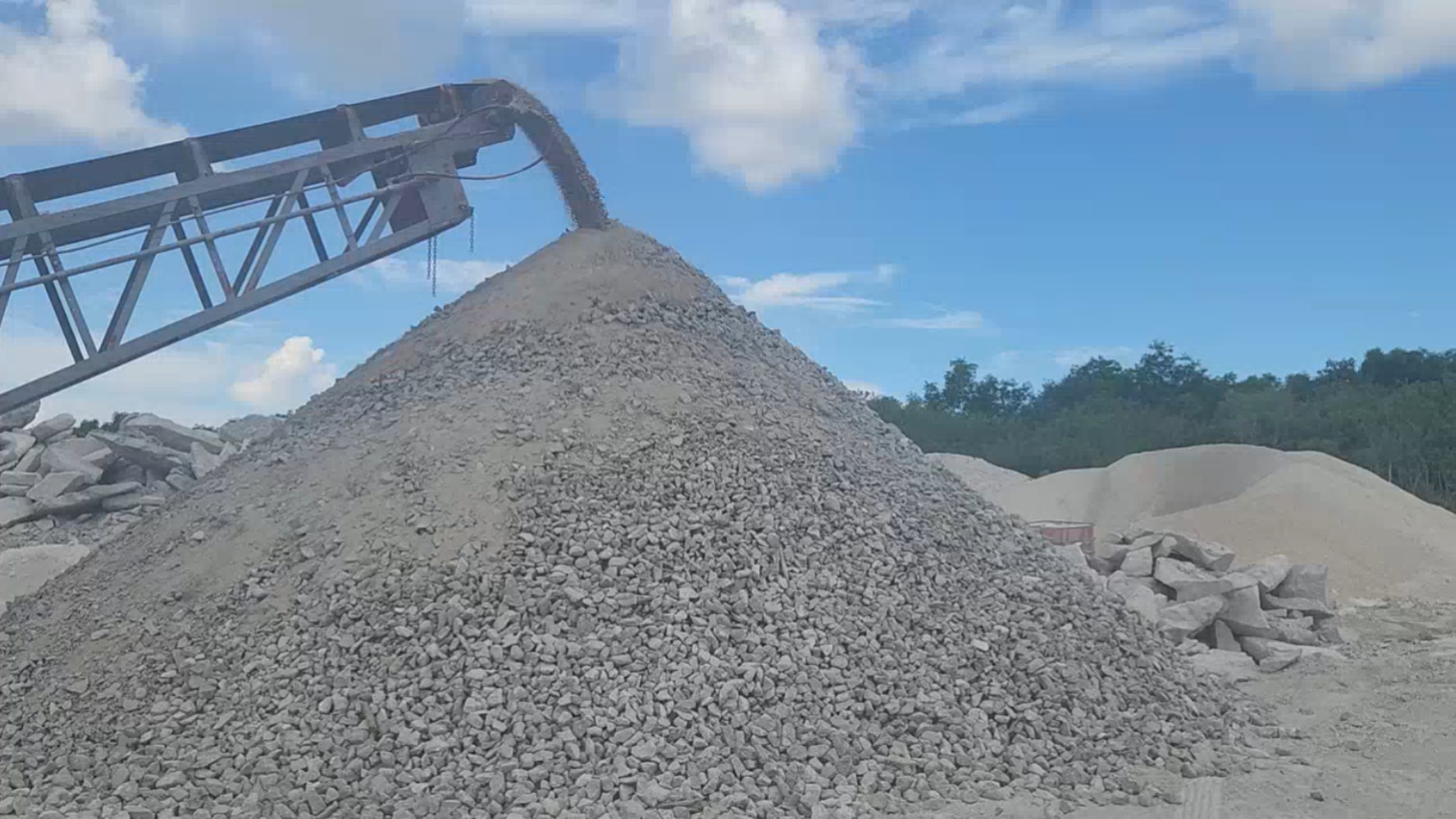
TL;DR: An asphalt millings driveway is a surface made from ground-up recycled road asphalt. Millings are cheap and compact well, but in Southwest Florida sand and summer heat they can soften, rut, and track. Repurposed Material of Naples does not sell millings. We accept asphalt for recycling at a listed fee, and we sell recycled crushed concrete driveway base starting at $20 per cubic yard.
If you have been pricing an asphalt millings driveway for a property in Naples or Golden Gate Estates, you have found the same thing everyone else does: plenty of national articles about millings, and almost nothing about how they behave in Collier County sand and August heat. This guide covers both, plus what we actually stock at our Basik Drive facility.
One thing up front, because it saves a phone call. Repurposed Material of Naples does not sell asphalt millings. We take asphalt in for recycling as a disposal category, and the recycled driveway surface we do sell is crushed concrete. The last two sections cover both.
What Are Asphalt Millings?
Asphalt millings are the material produced when an existing asphalt road or parking lot is ground down by a milling machine before resurfacing. The result is a loose, dark aggregate of old asphalt containing both stone and aged binder. In the industry it is usually called reclaimed asphalt pavement, or RAP.
Because millings still contain the original bitumen binder, they behave differently from plain stone. Under traffic, sun, and compaction that binder partially re-bonds, which is why a millings driveway stiffens over its first few months instead of staying loose like gravel. Millings are a byproduct, not a manufactured product, so gradation and binder content vary from load to load. Two loads from two suppliers are not the same material.
Are Asphalt Millings Good for a Driveway?
Asphalt millings work well for long rural driveways, farm lanes, and overflow parking where a low cost per square foot matters more than a finished look. They compact tighter than loose gravel and produce less dust. They are a poor fit where the surface will be hot, poorly drained, or visible from a front door.
The answer depends on the comparison. Against loose gravel on a 400 foot rural drive, millings win on dust and migration. Against poured concrete on a suburban lot, they lose on appearance and edge definition.
Most millings guides also skip a structural point. The Federal Highway Administration notes that to produce a granular base or subbase aggregate, RAP must be crushed, screened, and blended with conventional granular aggregate or reclaimed concrete material, because RAP alone has lower bearing capacity than a conventional aggregate base. Millings are a surface course. Whatever sits under them still does the load-bearing work, which is why our crushed concrete size guide covers base layers first.
Asphalt Millings vs Gravel vs Crushed Concrete: Which Holds Up Better?
For a Southwest Florida driveway, crushed concrete is the most predictable of the three. Millings bind tighter than gravel but soften in heat and stain what they touch. Gravel is cheapest per yard but migrates and needs regular raking. Crushed concrete compacts into a firm, light-colored base that does not track binder into a garage.
Prices below are our own published per cubic yard rates. Millings and virgin gravel pricing varies by supplier, and we quote neither.
| Asphalt millings (RAP) | Gravel / virgin stone | Recycled crushed concrete | |
|---|---|---|---|
| What it is | Ground-up road asphalt, aged binder still in it | Quarried virgin rock, screened to size | Demolition concrete, crushed and screened on site |
| How it binds | Partially re-bonds with heat and compaction | Does not bind, interlock only | Compacts firmly when a minus grade is rolled |
| Appearance | Dark grey to black, fades with UV | Natural stone tones | Light grey, blends with SWFL landscaping |
| Common complaint | Tracks and stains in heat, ruts under turning tires | Migrates, needs re-raking | Dusty until wetted and compacted |
| Available from RM Naples | No. Accepted for recycling only | No | Yes, five grades by the cubic yard |
| Our published price | Not applicable | Not applicable | $20 to $30 per cubic yard by grade |
For a deeper recycled versus quarried comparison aimed at contractors bidding work, see crushed concrete vs virgin stone.
How Much Does a Millings Driveway Cost?
Millings are usually the cheapest driveway surface per cubic yard because they are a waste stream, but delivered cost depends more on haul distance and load size than on the material itself. Budget for base preparation and compaction too. Millings laid straight onto Naples sand will not stay flat, whatever you paid per yard.
We will not quote a millings price, because we do not sell them. What we can give you is a real anchor for the alternative. Our recycled aggregate is priced per cubic yard at the purchase station: 4.0 inch mixed base rock CC at $20, 1.5 inch minus CC at $25, 1.5 inch to 4.0 inch CC at $25, and 3/4 inch minus CC at $30.
The number people get wrong is quantity, not unit price. Material is sold by volume and hauled by weight, and the two do not convert the way most people assume. Work out your cubic yards with our cubic yard weight guide before you book a truck.
What Naples Sand, Heat, and Wet Season Do to a Millings Driveway
Southwest Florida gives a millings driveway three problems at once. The first is subgrade. Much of Collier County sits on sand, which has little bearing capacity of its own and moves under load. A surface course on unimproved sand ruts at the wheel tracks and wherever a vehicle turns. That is a base problem rather than a millings problem, and it is why a compacted crushed concrete base matters more here than it does in Georgia clay.
The second is heat. Millings rely on residual binder softening and re-bonding, and in a Naples summer that softening does not stop at a useful point. Hot millings pick up on shoes and tires, print under a turning wheel, and carry into garages, pool decks, and light-colored pavers.
The third is water. A wet season downpour on a partially bound surface moves fines, and anything that moves fines eventually moves the surface. Crowning, edge restraint, and a drainage plan matter more here than the choice of surface material.
Do You Need a Permit to Put Millings on Your Property?
Do not assume reclaimed asphalt counts as clean fill you can spread freely. Before laying millings on private property in Collier County, check driveway, culvert, and stormwater requirements with the county, and be aware that Florida regulators have raised questions about what leaches out of reclaimed asphalt.
University of Florida environmental engineering researchers note that Florida has voiced concern about constituents leaching from RAP, and that significant knowledge gaps remain around which constituents are present and how mobile they are. That is not a reason to panic. It is a reason to confirm with the county before spreading several hundred tons near a well, a swale, or a canal.
What RM Naples Sells Instead: Recycled Crushed Concrete by the Cubic Yard
Our recycled aggregate comes from concrete brought into the Naples yard, crushed and screened on site. Most driveway customers take a coarser grade as base and a finer minus grade on top. The full aggregate range sits under services, and the size guide explains what “minus” means.
Crushed concrete answers two of the three Florida problems directly. It compacts into a load-bearing layer rather than relying on binder, and it has no bitumen to soften, track, or stain a light paver apron in August. It is dusty until wetted and rolled, a fair trade against black footprints on a pool deck.
Where Can I Recycle the Asphalt I Am Tearing Out?
Repurposed Material of Naples accepts asphalt for recycling at 195 Basik Drive, Naples FL 34114. Asphalt is listed at $5 on our asphalt disposal page, the lowest disposal rate we publish. Call 239-452-2839 before you load, so we can confirm the rate and how the material needs to arrive.
If you are replacing an old driveway or a small parking area, the demolition debris is a real cost line, and searching for asphalt recycling near me is how most people find us. Concrete, roof tile, and yard waste have their own published rates on the disposal and drop-off page. If the concrete you are removing has rebar in it, read our rebar disposal guide first, because rebar changes the rate. Clearing trees at the same time? Stump disposal is priced by diameter.
Frequently Asked Questions
How much does a millings driveway cost?
Millings are typically the cheapest driveway surface per cubic yard because they are a recycled byproduct, but delivered cost depends on haul distance, load size, and local supply. Repurposed Material of Naples does not sell or quote millings. Our recycled crushed concrete runs $20 to $30 per cubic yard by grade.
What are the disadvantages of asphalt millings?
The main disadvantages are inconsistency, appearance, and heat behavior. Gradation and binder content vary load to load. The surface tracks and stains in hot weather, ruts where vehicles turn, and still needs a properly compacted base underneath. Reclaimed asphalt also carries unresolved environmental questions in Florida.
Will asphalt millings get hard?
Partially. Residual binder in millings re-bonds under compaction, traffic, and heat, so the surface stiffens over the first months. It never cures into a solid slab like hot-mix asphalt or concrete. In Southwest Florida summer heat, that same binder can soften again rather than staying firm.
Is asphalt millings good for driveways?
For long rural drives, farm lanes, and overflow parking where cost matters more than appearance, millings are a reasonable choice. For suburban Naples lots with pavers, pool decks, or a garage floor to protect, compacted recycled crushed concrete is more predictable and does not track binder indoors.
Talk to Us Before You Order
Whether you are hauling off an old asphalt driveway or buying material for a new one, the fastest way to a straight answer is to call. Repurposed Material of Naples has recycled construction and demolition material for Collier and Lee County customers from 195 Basik Drive for three decades, and we will tell you when the answer is a product we do not carry.
Call 239-452-2839, email keith@rmnaples.com, or use the contact page. Bring your square footage and planned depth, and we will help you work out the cubic yards.