
TL;DR: Building a gravel driveway in Naples means a stable sand subgrade, a compacted base layer, and a wearing course that binds instead of a loose rock that migrates. The method is the same everywhere: clear, grade, compact in lifts, then top dress. What changes here is the subgrade (soft Naples sand) and the schedule (build before the wet season, not during it). RM Naples supplies the base and wearing course material by the yard; a contractor handles equipment and grading.
If you have looked at a national driveway guide already, you have probably noticed it skips straight past the part that matters most in Southwest Florida: what is under the gravel. Naples sits on sand, not the clay or loam most of these guides assume, and that single fact changes how the base behaves, how fast water moves through it, and when it is safe to build.
How do you build a gravel driveway?
A gravel driveway goes down in four stages: clear and grade the path, compact the exposed subgrade, place and compact a base layer for load bearing, then top dress with a finer wearing course for a walkable, drivable surface. Each layer is compacted before the next goes on top of it. Skipping compaction on any single layer is the most common reason a driveway ruts within a year.
Start by marking the width and clearing sod, roots and topsoil down to firm subgrade. On a flat Naples lot, grade a slight crown or cross slope so rain sheets off the sides rather than pooling down the center. Compact the exposed sand before anything else goes on it. Only then place the base course, compact it, and finish with the wearing course. Skipping straight to a single layer of loose rock over sand is why so many driveways in this area rut and shift within a season; without a compacted base underneath, the wearing course has nothing solid to sit on.
How thick should a gravel driveway be?
A residential gravel driveway typically needs 4 to 6 inches of compacted base course plus 2 inches of wearing course on top, for a total compacted depth of 6 to 8 inches. Heavier vehicle traffic or genuinely soft subgrade calls for the deeper end of that range, and a soil that will not compact firm on its own may need more base, not more surface rock.
Depth is not a number you eyeball. It is measured after compaction, not before, because loose material compacts down by a meaningful margin as it is rolled. Base course thickness in road and driveway construction is sized to the subgrade it sits on and is only effective when each layer is properly compacted, which is exactly why the compaction step in the previous section is not optional. On a Naples lot with genuinely soft sand under the surface, adding an inch to the base course is cheaper insurance than repairing a rutted driveway a year later.
What is the best rock for a driveway in Southwest Florida?
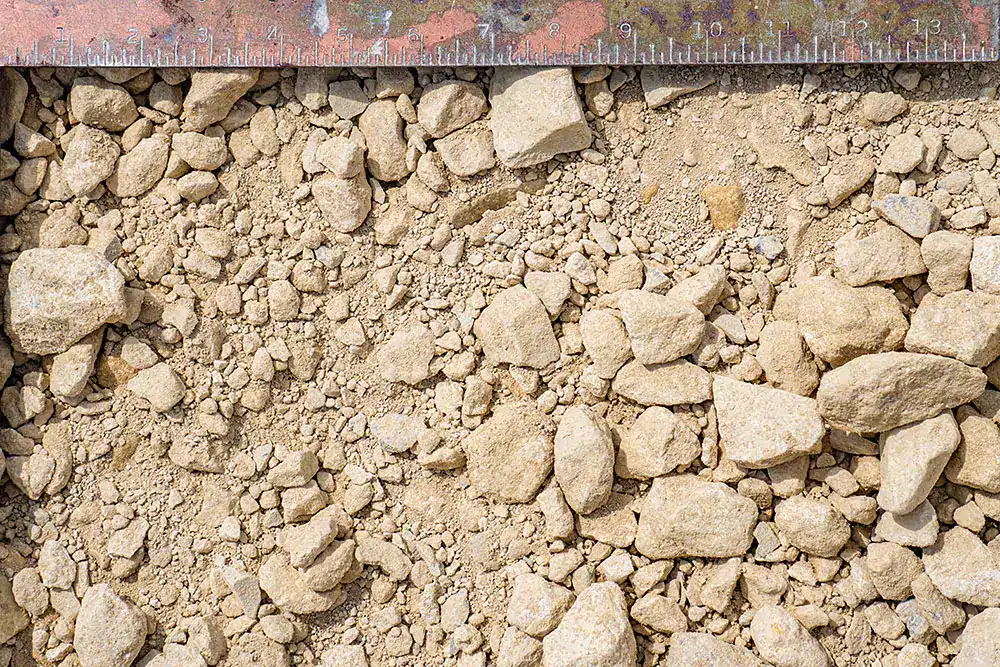
The best driveway rock in SWFL binds and locks together rather than shifting underfoot, which means an angular material with fines, not a round decorative stone. 4.0 mixed base rock works well as the compacted base layer, and a screened 3/4 minus or 1/4 minus crushed concrete makes a tighter, walkable wearing course than a round rock ever will.
Round river rock and pea gravel look good in a photo but they roll under tires and migrate to the edges of the drive, because there is nothing in a rounded stone to interlock with its neighbours. Recycled crushed concrete is angular by nature and carries fine particles that fill the voids between larger pieces, which is what makes a compacted layer of it act almost like a loose pavement rather than a pile of loose stone. It is worth being honest about the limits too: crushed concrete is not the right choice everywhere, and grade selection for other uses like paver base is covered in full in the crushed concrete size guide rather than repeated here. Asphalt millings are a different material entirely, with their own tradeoffs, covered separately in the asphalt millings driveway guide.
Building on Naples sand: the subgrade step most guides skip
Most gravel driveway guides online are written for a subgrade of clay, loam or frozen ground up north, none of which describes a Naples lot. Local sand does not hold a shape the way clay does, and the water table sits close to the surface across much of Collier County. That combination means two things a generic guide will not tell you: first, sand alone rarely compacts to a stable working surface without a proper base course over it, because it keeps shifting under load instead of locking together. Second, a driveway built during a heavy rain stretch can wash out before the base ever gets a chance to set and lock in place.
Florida’s flat, sandy terrain routes a large share of ordinary rainfall straight into the ground rather than off the surface, which keeps subgrade conditions wetter for longer after a storm than they look on the surface. Building on a subgrade that has not had time to firm back up after a heavy afternoon storm is a common, avoidable mistake. Give the ground a few dry days before you compact it, not just before you start digging.
How much does a gravel driveway cost?
A gravel driveway’s cost comes from three line items: material by the yard for the base and wearing course, delivery or haulage, and compaction equipment or labor if you are not renting and running it yourself. A written quote from the yard is the only honest figure, because it depends on quantity, grade and whether you are hauling it yourself.
What drives the total up or down is mostly quantity and grade, not labor rates. A longer or wider drive needs proportionally more material at both layers, and a deeper base for soft subgrade adds a real cost, not a marginal one. Self-hauling from the facility in a truck or trailer removes the delivery line item entirely if you have the equipment for it.
How much material do you need to order?
Material quantity for a gravel driveway is calculated in cubic yards from length times width times compacted depth, converted from cubic feet, with base and wearing course figured separately since they are different depths and often different grades. A drive that is 12 feet wide and 100 feet long, for example, covers 1,200 square feet before depth is even factored in, and both the 4 to 6 inch base layer and the 2 inch wearing course need their own volume calculated at that footprint.
Order a small margin over the calculated volume, because compaction settles material down and grading always leaves some waste at the edges. Browse crushed concrete and rock by grade to see what is stocked before finalizing quantities, and confirm current stock and pricing directly rather than assuming a grade is always on hand.
Compaction, and why a driveway fails without it
Compaction is the step that separates a driveway that lasts from one that ruts within a season, because it is what locks individual stone particles together into a load bearing layer instead of leaving them loose. A plate compactor or roller, run in the number of passes appropriate to the layer depth, is standard for a residential drive; skipping this step and simply driving on loose rock to “compact it naturally” is how driveways fail early.
Each layer gets compacted before the next goes down, not just once at the very end. Compacting only the top of a thick pile of loose material leaves the bottom uncompacted and unstable, which shows up later as settling and rutting exactly where the weakest spot was hiding the whole time.
How do you maintain a gravel driveway through the wet season?
A gravel driveway in Naples needs periodic regrading to redistribute rock that migrates toward low points and the edges, and a check after major storms for washout along the crown or at the entrance where runoff concentrates. Left alone through a full wet season, a driveway without a maintained crown will develop ruts exactly where water has been running.
Regrade with a rake or a box blade before rock loss gets severe enough to expose the base course underneath, since the wearing course is meant to be sacrificial and the base is not. If you are clearing overgrown vegetation or debris along the edges of an older drive as part of that maintenance, our land clearing cost guide walks through what that separate job typically involves. For the surrounding lawn, our guides on levelling an uneven yard and applying compost to an established lawn cover the areas next to the drive, and our drainage rock and French drain guide covers what to do where the driveway edge holds standing water after a storm.
Ready to order material for your driveway
RM Naples stocks the base rock, crushed concrete grades and rock products covered in this guide for pickup or delivery, and this same recycled facility is where a contractor’s clean concrete gets taken during a driveway teardown, covered on our disposal and drop off page. See the full product catalog or the services overview for what else the facility handles, read more about the facility, or contact us with quantities and we will confirm current grade availability and pricing.
Frequently asked questions
What size gravel for a driveway?
A driveway typically uses two sizes: a larger base course such as 4.0 mixed base rock for load bearing, and a finer wearing course such as 3/4 minus or 1/4 minus on top for a smoother, drivable surface.
How much gravel do I need for my driveway?
Calculate length times width times compacted depth in feet, convert to cubic yards, and figure the base layer and wearing course separately since their depths differ. Order a small margin over the raw calculation to cover compaction settling and edge waste.
How do you fix potholes in a gravel driveway?
Remove loose debris from the pothole, add fresh base material in the low spot, compact it in place, then add a matching wearing course layer and blend the edges with a rake or box blade so the repair does not sit higher than the surrounding surface.
Where can you buy gravel for a driveway?
RM Naples sells recycled crushed concrete and rock by the yard for pickup or delivery; see the full catalog for current grades or contact us with the quantity you need.