
TL;DR: Drainage rock is angular, washed stone sized so water moves through the gaps between the pieces instead of pooling. In Naples, where the water table sits close to the surface and sand will not shed rainfall on its own, the right stone matters more than it does up north. Round pea gravel packs tighter and drains worse than angular crushed stone, and buying by the yard from RM Naples is cheaper than bagged rock for anything bigger than a flower bed.
If you have ever watched a Naples yard hold water for two days after a summer downpour, you already know the problem this post is about. The fix usually is not more grading. It is the right rock, in the right place, at the right size.
What is drainage rock, and what makes a stone good at draining?
Drainage rock is any washed, angular stone used to create open space underground so water can move through it instead of sitting in the soil. The key property is void space: gaps between angular pieces that stay open under load, unlike sand or clay, which compact and hold water.
Not every rock qualifies. Round river rock and pea gravel shift and nest together under pressure, closing off the gaps that make drainage stone work in the first place. Angular, machine crushed stone locks together at the edges instead of nesting, so the voids stay open season after season. That is the whole reason a supplier sells a “drainage rock” product separately from decorative rock: the shape is doing the work, not the material.
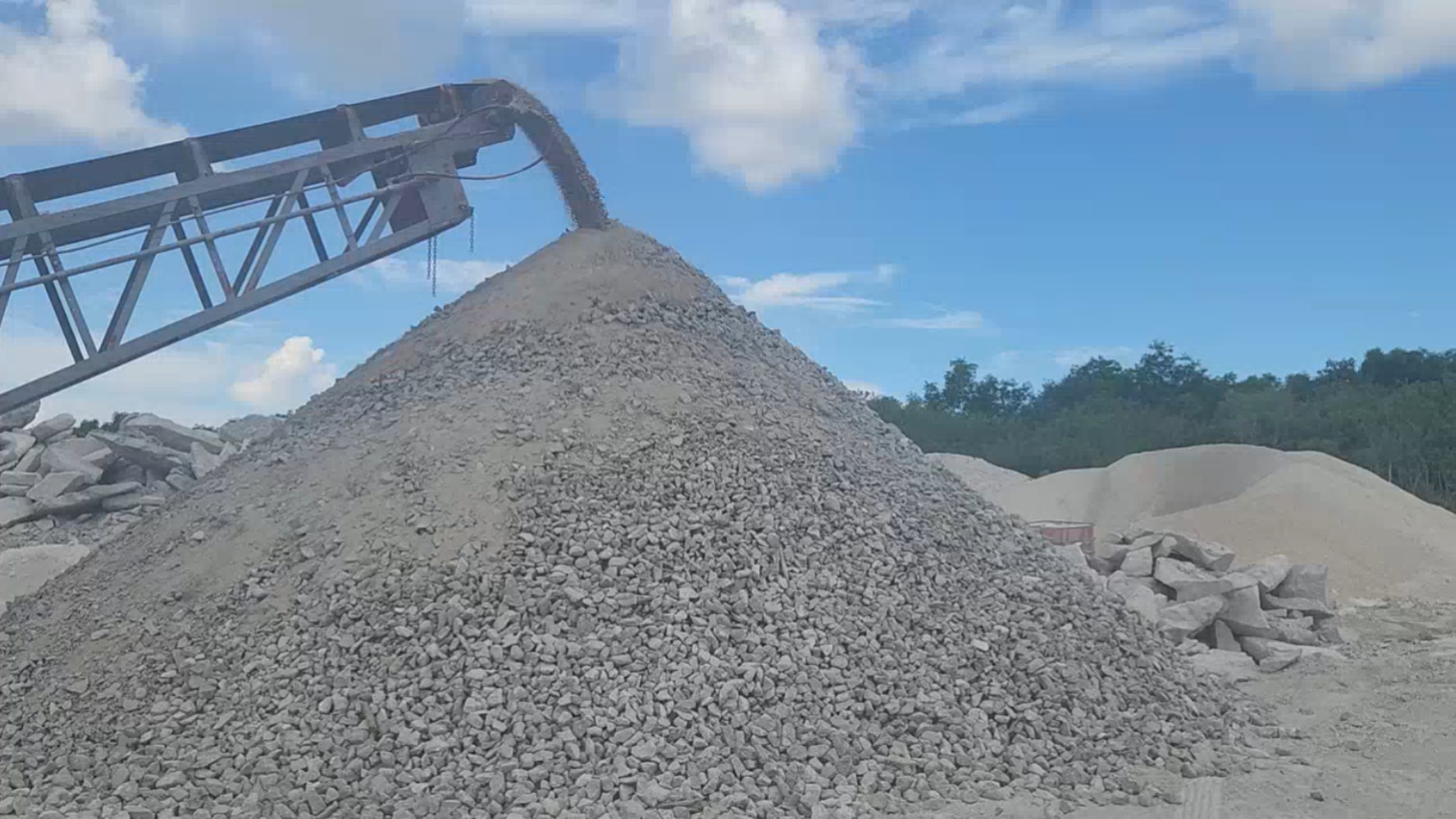
RM Naples carries this as crushed concrete graded by size, including 1.5 minus rock and 1.5 to 4 rock, both angular and both sold by the yard rather than the bag.
Is drainage rock the same as gravel?
No. Gravel is a general term for any small, loose stone, including smooth, rounded pea gravel that drains poorly. Drainage rock specifically means angular, washed stone chosen and graded for open void space, which is why a supplier’s “gravel” aisle and its “drainage rock” product are usually not the same thing.
This distinction shows up on packaging and in casual conversation, which is exactly why it causes confusion. A homeowner asking for “gravel” at a big box store may walk out with rounded pea gravel that looks similar but performs differently underground. If the project is a French drain or a wet spot that needs to actually move water, ask specifically for angular drainage stone, not decorative gravel.
Pea gravel or crushed stone: which drains better?
Angular crushed stone drains better than round pea gravel. Pea gravel’s smooth, rounded shape lets individual stones nest together and migrate under water flow, which narrows the void space over time. Angular crushed stone locks at its edges and holds its shape, keeping the gaps open that let water pass through instead of pooling.
Pea gravel still has a place. It looks clean in a decorative border or a dry creek bed where drainage performance is secondary to appearance. But for a French drain, a driveway base, or anywhere the job is actually moving water away from a structure, angular stone is the functional choice, not the aesthetic one. A Penn State research summary on drainage aggregate specifies clean, washed, crushed stone to a minimum thickness around drain trenches, which is the standard the industry builds French drains to; it does not spec rounded pea gravel for that role.
There is a third option most of this comparison skips: recycled crushed concrete. It is angular by nature, since it is broken and screened rather than naturally rounded, and it behaves like drainage stone in the same applications. RM Naples sells it in the same size ranges as virgin crushed stone, at a lower cost, because it does not have to be quarried and hauled in from out of state.
What size drainage rock do you need for a French drain?
Most French drains use angular stone in the 3/4 inch to 1.5 inch range around the perforated pipe, sometimes called #57 stone. Smaller stone clogs faster with fines washing in from the surrounding soil, while stone larger than about 1.5 inches leaves gaps wide enough for soil to migrate into the trench over time.
Florida sand makes this sizing choice more important than it is in heavier soils. Sandy fines move easily with water, so a poorly sized or unwashed stone silts up faster here than it would in clay. That is also why the stone needs to be washed, not just screened: dust and fines left on the surface of the rock close off void space almost immediately once the trench starts working.
What counts as clean fill matters here too, because it gets confused with drainage stone. Clean fill is uncontaminated soil or sand used to raise or level a grade, not a drainage material, and RM Naples does not sell fill dirt. If a Naples property needs both fill and drainage rock, expect to source them from two different products, and do not substitute one for the other. Drainage rock needs void space; fill needs the opposite, compaction.
Choosing drainage rock for a Naples lot
Naples sits on flat, low-lying sand with a water table that can be within a few feet of the surface for much of the year, which changes how a French drain has to work here compared to a northern lot with a deep water table and clay subsoil. UF/IFAS describes Florida’s soils as typically very sandy, holding little water or nutrients on their own, which sounds like fast drainage but actually means water moves straight down until it hits the water table, then has nowhere left to go during a wet-season downpour.
That combination, flat grade plus a shallow water table plus sand that will not hold a slope, is why a French drain on a Naples lot has to daylight somewhere lower, or tie into a dry well or swale, rather than just running the pipe and hoping gravity does the rest. A drain that dead-ends in flat sand with a high water table backs up during the exact storms it was built for.
If a lot floods only in the rainy season and drains fine the rest of the year, that is usually the water table rising seasonally, not a grading defect. Before digging a trench, it is worth confirming whether the standing water is a surface drainage problem the rock can fix, or a seasonal water table issue that a French drain cannot outrun on its own.
Fixing driveway drainage without regrading the whole thing
Driveway drainage problems in Naples usually show up as standing water at the low end, or a soft, muddy edge where the driveway meets the lawn. Full regrading fixes it but costs the most and disturbs the whole yard. A French drain along the low side, backfilled with angular drainage rock, intercepts the water before it reaches the driveway surface and is far less invasive.
The same principle applies to a gravel or crushed concrete driveway that puddles instead of shedding water: the base layer usually needs a coarser, more angular material underneath the wearing surface, not just a topping of decorative rock. RM Naples’ guide to building a gravel driveway in Naples covers base and wearing course selection in more depth if the issue is the driveway surface itself rather than a wet edge.
For a straightforward wet-edge fix, a short French drain trench filled with 1.5 minus rock or 4.0 mixed base rock wrapped around a perforated pipe handles most residential cases without touching the rest of the driveway.
How much drainage rock will your trench take?
A standard French drain trench, roughly 12 inches wide and 18 to 24 inches deep, takes close to half a cubic yard of stone for every 10 linear feet once the pipe and a bit of cover are accounted for. Wider or deeper trenches, or trenches without a pipe that rely on rock volume alone, need proportionally more.
Because a residential French drain rarely runs more than 40 to 60 feet, most homeowner projects land somewhere between one and three cubic yards of stone total. That is well past what bagged rock from a home improvement store can deliver cost effectively, since a single cubic yard works out to about 54 bags at the standard half cubic foot bag size.
Buying drainage rock by the yard in Naples
Bagged rock makes sense for a small planter or a border. It stops making sense once a project needs more than a few bags, both on price per unit and on the number of trips required. RM Naples sells 1.5 minus rock, 1.5 to 4 rock, and graded recycled crushed concrete by the yard from its Naples facility, which is the format a real French drain or driveway drain project needs.
Measure the trench, or the driveway base area, before ordering so the order matches the job rather than guessing and making a second trip. RM Naples also offers delivery for larger orders, and stocks the organic topsoil and mulch many drainage projects need afterward to restore the surface around the finished trench.
Homeowners working on drainage alongside a broader yard project may also want RM Naples’ guides on leveling a yard in Naples or applying compost to a lawn, both of which touch the same sandy soil and wet season constraints covered here. Contractors and landscapers clearing debris to make room for a drainage project should see the land clearing cost guide for how disposal and material sourcing fit together on one job. For everything RM Naples buys and sells, start at the shop or browse repurposed yard materials directly.
FAQ
What rock is best for drainage?
Angular, washed crushed stone in the 3/4 inch to 1.5 inch range drains best. Its irregular shape holds open void space between pieces, unlike rounded pea gravel, which nests and closes those gaps over time.
Is drainage rock the same as #57 gravel?
57 stone is one common size specification used for drainage rock around French drain pipe, typically about 3/4 to 1 inch. Not all drainage rock is labeled #57, but stone sold that way is sized for this exact use.
What is the point of drainage rock?
Drainage rock creates open space underground so water moves through a trench or base layer instead of pooling in the surrounding soil. It works by shape, not by size alone: angular stone keeps its gaps open under load.
Can you use crushed concrete for drainage? (inferred, not sourced)
Yes, angular recycled crushed concrete performs similarly to virgin crushed stone in most drainage applications, since both rely on the same angular shape for void space. RM Naples sells it in the same size grades used for French drains and driveway bases.