
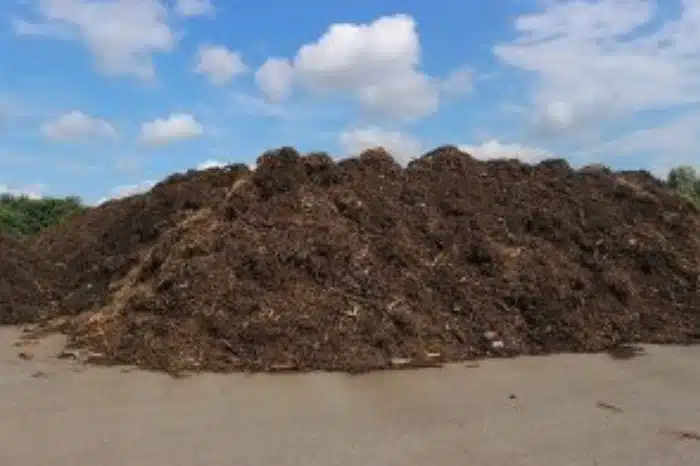
If you’ve tried to plant a garden bed straight into Naples’ native soil and watched it struggle, you’re not doing anything wrong. You’re just working with sandy, fast-draining, often alkaline soil that doesn’t hold water or nutrients the way garden plants need. The fix isn’t a special fertilizer trick; it’s building better soil on top of what you’ve got, using organic topsoil, compost, and mulch in the right combination.
This guide walks through why Naples soil needs help in the first place, how to layer topsoil, compost, and mulch for garden beds, and how much of each you’re realistically likely to need for a typical home garden project.
Why Naples’ Native Soil Needs Help
Southwest Florida sits on predominantly sandy soil, often with a naturally alkaline pH, a combination that drains water (and the nutrients dissolved in it) away from plant roots far faster than the loamy, organic-rich soil most gardening advice assumes you’re starting with. Add heat and a long growing season, and native soil alone often can’t hold enough moisture or organic matter to support a productive vegetable bed or ornamental garden without regular intervention.
That’s why most successful Naples gardens aren’t grown directly in native soil. They’re grown in an amended bed built from organic topsoil as a base, with compost worked in for nutrients and organic matter, and mulch on top to slow moisture loss. Each layer does a different job, which is why swapping one out or skipping it tends to show up as a struggling garden later in the season.
Building the Right Soil Mix for Your Garden Beds
When people ask what the best soil for gardens in Naples actually looks like, it’s rarely a single product. It’s a blend:
- Organic topsoil forms the structural base of a garden bed. It gives roots something to establish in that isn’t pure sand, and it’s the foundation the rest of the mix builds on.
- Compost is worked into that topsoil base to add organic matter and nutrients that sandy soil doesn’t retain well on its own. Compost also improves the soil’s water-holding capacity, which matters enormously in a climate where native sand drains almost as fast as you water it.
- Mulch goes on top, not mixed in. Its job is to slow evaporation from the surface, moderate soil temperature, and suppress weeds, extending the benefit of everything underneath it.
A simple starting approach for a new garden bed: build up with organic topsoil to your desired bed depth, work in compost at roughly a quarter to a third of the topsoil volume (adjust based on how depleted the existing soil is), then top with a couple of inches of mulch once plants are in. Exact ratios vary by what you’re growing (vegetable beds generally benefit from a richer compost ratio than ornamental beds), so if you’re planning a specific bed, RM Naples can help you think through quantities for your project.
Where Compost Fits Into the Mix
Compost is doing more work than people often assume. It’s not just “food” for plants; it’s what gives sandy soil the structure to hold water and nutrients in the first place. If you’re searching compost delivery near me for an existing garden rather than a new bed, the most common use case is top-dressing: spreading a layer of compost over existing beds once or twice a growing season to replenish organic matter that sandy soil naturally loses to drainage and heat.
RM Naples sells compost through its retail yard mulch, compost & soil page and the compost product page directly. Worth checking both the ratio guidance above and current availability before you plan a top-dressing schedule for the season.
How Much Topsoil Do You Actually Need?
Before you search topsoil delivery near me, it helps to know roughly how much you need: ordering by the bag for a full garden bed almost always costs more and takes longer than ordering bulk by the cubic yard for anything beyond a small container garden.
A rough way to estimate: multiply your garden bed’s length by width by desired soil depth (in feet) to get cubic feet, then divide by 27 to get cubic yards. For example, a 10-foot by 4-foot bed filled 1 foot deep needs 40 cubic feet, or roughly 1.5 cubic yards. If you’re not confident in the math, RM Naples can help you estimate delivery quantity based on your bed dimensions when you place an order through the organic topsoil product page or the purchase station.
Naples’ Growing Season: Timing Your Soil Prep
SWFL’s growing calendar runs opposite to a lot of the country most gardening advice is written for: the cooler months (roughly November through April) are prime growing season for many vegetables and ornamentals here, while the hot, humid summer months are tougher on cool-season crops and harder on new plantings generally. That makes late summer/early fall the natural window to refresh garden beds with new topsoil and compost ahead of the cooler planting season, rather than waiting until spring the way gardeners in northern climates typically do.
If your yard work is instead about post-storm cleanup rather than building new garden beds, that’s a different topic. See our hurricane season yard debris guide for that side of yard maintenance.
Buying Topsoil, Compost & Mulch From RM Naples
RM Naples sells organic topsoil, compost, and mulch retail for homeowner pickup or delivery through its repurposed yard mulch, compost & soil page, with individual product pages for mulch, compost, and organic topsoil. For homeowner-scale garden projects, ordering through the purchase station and asking the team to help estimate quantity based on your bed size is the easiest way to avoid over- or under-ordering.
Learn more about RM Naples and how the facility sources and processes its retail materials.
Frequently Asked Questions
Why is it so hard to grow a garden in Naples’ native soil?
Naples sits on predominantly sandy, often alkaline soil that drains water and nutrients away from plant roots quickly, and doesn’t hold organic matter well on its own. Most successful gardens here are built on an amended bed of topsoil and compost rather than grown directly in native soil.
What’s the best soil mix for a garden bed in Naples?
A typical approach is organic topsoil as the structural base, compost worked in at roughly a quarter to a third of the topsoil volume, and a couple of inches of mulch on top. Exact ratios vary by what you’re growing and how depleted the existing soil is.
How much topsoil do I need for my garden bed?
Multiply your bed’s length by width by desired depth (in feet) to get cubic feet, then divide by 27 for cubic yards. RM Naples can help estimate delivery quantity based on your specific bed dimensions.
When is the best time to refresh garden soil in Naples?
Late summer into early fall is a good window, since it sets beds up ahead of SWFL’s cooler-season growing months (roughly November through April), when many vegetables and ornamentals perform best here.
Does mulch get mixed into the soil or applied on top?
Mulch goes on top of the soil, not mixed in. Its job is to slow surface evaporation, moderate soil temperature, and suppress weeds; mixing it into the soil defeats that purpose and can tie up nitrogen as it breaks down.
Ready to Build Better Garden Soil?
RM Naples supplies organic topsoil, compost, and mulch for homeowner gardens throughout Naples and Collier County. Contact RM Naples or visit the purchase station to figure out the right quantities for your garden bed, or browse the full yard mulch, compost & soil page to see everything available.
Managing landscaping for an HOA or a multi-property portfolio instead of a single home garden? See our companion guide on bulk mulch and topsoil for HOA and property management landscaping.