
TL;DR: To level a yard, fill low spots with a thin layer of sand mixed with topsoil, never bury the grass more than about an inch at a time, and let it settle between passes. In Naples, the two things that actually change the job are St. Augustine grass, which grows sideways along the surface and smothers under a thick top dressing, and sandy soil that drains fast but holds almost nothing back. Order lawn topsoil, not fill dirt, for the visible finish layer, and do the work in spring or early fall rather than the height of wet season.
A bumpy, low or uneven lawn is usually one of three problems: settling after construction or irrigation work, tree roots pushing up sections, or years of mower wear scalping the high spots and leaving the low ones bare. Before buying material, walk the yard after a rain and mark where water actually sits. Those low spots are where fill goes. If you’re deciding between fixing the surface and rebuilding a planting bed, note that this guide covers lawn leveling only. For amending soil in a new bed, see our garden soil mix guide for Naples.
How do you level a yard?
You level a yard by identifying low spots, filling them with a thin layer of sand or a sand and topsoil blend, and working it in gradually rather than dumping it all at once. Rake the material into the grass in a layer no thicker than about half an inch to one inch per pass, water it in, and let it settle for a couple of weeks before checking whether a second pass is needed.
The method sounds simple, and it is, but the two mistakes that ruin a leveling job both come from rushing it. The first is filling a low spot in one thick layer instead of two or three thin ones, which smothers the grass underneath before it can push through. The second is filling with whatever is cheapest and closest rather than a material sized and screened for lawn use. A load of construction fill dirt with clay clumps and debris in it behaves nothing like a screened lawn topsoil, and it will show as lumps and dead patches within a season.
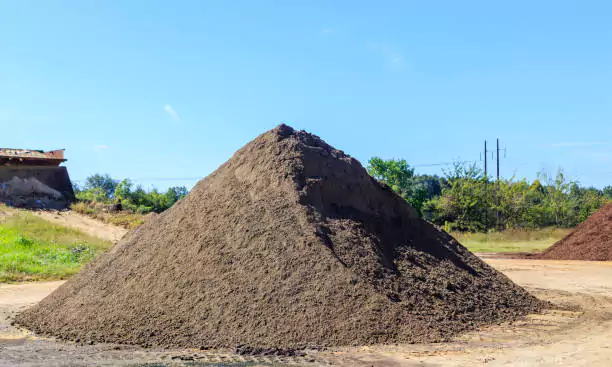
Start with a flat-bottom rake or a lawn leveling rake, not a shovel, to spread material evenly. On anything larger than a few low spots scattered across the yard, a landscaper with a power rake or a small skid steer will finish the job faster and more evenly than hand tools, and RM Naples’ organic topsoil is sold by the yard for exactly this kind of job.
How do you level a bumpy lawn without killing the grass?
You level a bumpy lawn without killing the grass by never covering more of the leaf blade than the grass can push through in a couple of weeks, which in practice means thin layers, not one thick fill. St. Augustine grass in particular spreads by surface runners called stolons, and burying those runners under too much material at once cuts off the growing points that let the grass recover.
That last point is not a guess. UF/IFAS describes St. Augustinegrass as spreading through stolons, aboveground stems with actively dividing cells at the nodes that generate new shoot and root growth, which is exactly the tissue a thick fill layer smothers. The same UF/IFAS guidance on thatch management recommends a topdressing layer of about a quarter inch of soil similar to what’s already under the turf, which is a useful benchmark even outside a thatch job: it’s the depth St. Augustine tolerates well in a single pass. For a genuinely low spot, plan on two or three passes at that kind of depth, spaced a couple of weeks apart, rather than one pass at the full depth you think the hole needs.
If a low spot is deep enough that this would take five or six passes, it usually means the sod itself has died back or thinned in that area, and the more efficient fix is to pull back the existing turf, fill to grade, then relay sod or plugs on top rather than trying to top dress through it.
What kind of sand or soil should you use to level a lawn?
For a shallow, cosmetic level, a washed sand or a sand-topsoil blend that drains the way the rest of your lawn already drains is the right call, because a heavier soil layered on top of sandy Naples ground can hold water at the surface and create a soggy patch where there wasn’t one before. For anything deeper than an inch or two, a screened lawn topsoil carries organic matter and nutrient that straight sand doesn’t, which helps the new layer support grass regrowth rather than just filling space.
Naples yards sit on sand almost everywhere outside a few pockets of muck or fill soil closer to the coast, so matching the fill to the base matters more here than it would in a clay-heavy climate up north. A mismatch, heavy topsoil over sharp sand or the reverse, creates a layering effect that shows up as drainage problems years later, not immediately. RM Naples sells organic topsoil for exactly this use, sized by the yard so you can order to the quantity your low spots actually need rather than guessing with bagged material from a big-box store.
Topsoil or fill dirt: which one do you actually need?
Topsoil is the finish layer that goes on top and grows grass; fill dirt is the bulk material that goes underneath to raise a grade before anything is planted on it, and the two are not interchangeable. If you’re filling a shallow low spot in an existing lawn, you want topsoil. If you have a genuinely sunken section of yard, several inches or more below grade, that needs bulk fill first and topsoil only as the final inch or two on top.
This is worth being direct about: RM Naples sells organic topsoil and does not sell fill dirt. If your project needs bulk fill to correct a real grade problem, an excavation contractor or a fill supplier is the right source for that material, and RM Naples is the right stop afterward for the topsoil finish layer, or for buying organic topsoil and compost once the grade is corrected. Trying to solve a several-inch sunken yard with topsoil alone means buying far more of a more expensive material than the job needs. See our crushed concrete size guide if the low spot is actually a driveway or hardscape base issue rather than lawn.
Leveling St. Augustine grass in Southwest Florida
St. Augustine grass is the dominant lawn grass in Naples and across Southwest Florida, and it behaves differently under a top dressing than the cool-season grasses most leveling guides are written for. Northern guides written for fescue or bluegrass assume a bunching grass that regrows upward from a crown. St. Augustine spreads sideways across the surface on stolons, and those surface runners are more exposed to being buried than a crown growing from below ground.
UF/IFAS’s guidance on St. Augustinegrass confirms the stolon growth habit directly: the grass generates new shoot and root growth from actively dividing cells at the stolon nodes, which sit at or near the surface. That’s the mechanism behind why a leveling job on St. Augustine fails differently than one on a northern lawn. It doesn’t die from a thick fill the way a bunching grass would show stress at the crown; it simply can’t push new growth up through material that’s covering too much of the runner network at once. The fix is the same thin-layer approach covered above, applied with more patience than a one-and-done weekend project usually gets.
Naples lawns that are mostly Bahia or Zoysia tolerate a slightly thicker single pass than St. Augustine, but the safe default across all three, and the one we’d recommend if you’re not sure which grass you have, is the thin-layer method.
How much does it cost to level a yard?
There’s no single honest number for leveling a yard, because the cost depends on how much material the low spots actually need, whether you’re doing it by hand or hiring a landscaper with equipment, and what grade of topsoil you choose. What we can say plainly: the material itself, sold by the yard, is one line item, and labor or equipment rental, if you’re not doing it yourself, is a separate one that usually costs more than the material.
A realistic small-yard leveling job (a handful of low spots totaling a few hundred square feet) uses well under a full yard of material. A whole-lawn releveling after major settling can run several yards. Rather than guess at a number that varies this much by job, the honest structure is: measure your low spots, calculate the volume using the maths in the next section, and get a written quote from whoever is doing the labor. RM Naples can quote the material cost directly through the shop or by contacting us.
How much material will you need?
Calculate cubic yards by multiplying the length and width of each low spot in feet, multiplying by the fill depth in feet (an inch is roughly 0.08 feet), and dividing by 27 to convert cubic feet to cubic yards. Add up every low spot separately rather than averaging the whole lawn, since a scattered handful of small dips uses far less material than one large sunken section, even if the total square footage looks similar.
For example, a 10 foot by 10 foot low spot filled to a 1 inch depth needs roughly 0.3 cubic yards, well under a single yard. Three or four spots that size add up fast, though, which is why measuring before ordering matters more than eyeballing it. RM Naples sells organic topsoil by the yard specifically so you can order close to what the maths says rather than buying in bagged increments that rarely match the real quantity.
When to do it, and when to wait
Late spring through early fall, outside the peak of Naples’ wet season, is the more forgiving window for leveling work, because the grass is actively growing and can recover from the disturbance faster than during a cooler or drier stretch. Doing this work while it’s actively raining most days works against you twice: heavy rain can wash a fresh, unsettled layer of fill before it beds in, and saturated ground makes it harder to judge which spots are genuinely low versus just temporarily waterlogged.
If you’re leveling to fix a drainage problem rather than just a cosmetic dip, walk the yard during or right after a heavy rain first and mark where water actually pools, since that’s the only reliable way to find true low spots on a flat Naples lot. If the water is pooling because of a bigger grading or drainage issue rather than a few soft spots, that’s a different project. See our guide on drainage rock and French drains for that case, and our gravel driveway guide if the uneven surface is actually a driveway rather than lawn.
Frequently asked questions
How do you level a yard by hand?
Rake sand or a sand-topsoil blend into low spots in thin layers of about a half inch to an inch, working it into the existing grass rather than piling it on top, then water it in and let it settle before adding more. A flat-bottom or leveling rake spreads material more evenly than a shovel and reduces the risk of burying grass too deep in one pass.
When should you level a lawn?
Late spring through early fall, while the grass is actively growing, gives it the best chance to recover from a fresh fill layer. Working during the height of Naples’ wet season risks washing out a fresh layer before it settles and makes it harder to identify true low spots versus temporarily saturated ground.
What can you use to level a lawn?
Washed sand works for shallow, purely cosmetic dips, while a screened lawn topsoil or a sand-topsoil blend is the better choice for anything deeper than an inch or two, since it carries organic matter that helps grass reestablish in the filled area. RM Naples sells organic topsoil by the yard for this purpose and does not sell fill dirt.
How do you level a sloping yard?
A gentle, consistent slope is often not a problem to fix at all, and can even help shed water away from a house. If a slope has an abrupt low spot or a section that holds water, treat that section the same as any other low spot: measure it, fill it in thin layers, and let it settle. A slope significant enough to need real regrading, rather than spot leveling, is a job for a landscaper or grading contractor, with RM Naples supplying the topsoil finish layer afterward.
Get your topsoil in Naples
RM Naples supplies organic topsoil, compost and crushed stone by the yard from our facility at 195 Basik Drive, serving Naples, East Naples, Marco Island, Bonita Springs and Fort Myers. Whether you’re filling a few low spots or finishing a larger regrading project, contact us or visit our shop to order material sized to the job, not a bagged guess. If your project also has debris coming off the lot, see our services page or our concrete disposal and drop off page for what we accept.