
TL;DR: Mulch vs compost is not really a competition. Compost feeds the soil from within, mulch protects it from above, and most Southwest Florida yards want both. Compost gets dug in or spread thin over a bed. Mulch stays on the surface. At RM Naples, mulch is $10 and compost is $15 per cubic yard, so the cheaper product is usually the one to buy first.
If you are standing in front of two piles trying to work out mulch vs compost, the fastest way to decide is to stop thinking about which one is better and start thinking about where each one goes. Compost goes into the soil. Mulch goes on top of it. They are not competing products, and buying the wrong one for the job is how people end up with a bed that dries out in April or a lawn edge full of weeds by June.
This guide is a buying decision, not a bed building tutorial. If you have already decided you are building or rebuilding a bed and you want the layering method for Naples sand, our garden soil mix guide for Naples covers that in detail.
What is the difference between mulch and compost?
The difference between mulch and compost is placement and purpose. Compost is decomposed organic material that gets mixed into soil or spread thinly over a bed to add organic matter and improve how the soil holds water and nutrients. Mulch is a coarser layer left on the surface to hold moisture in, block weeds and shade the soil.
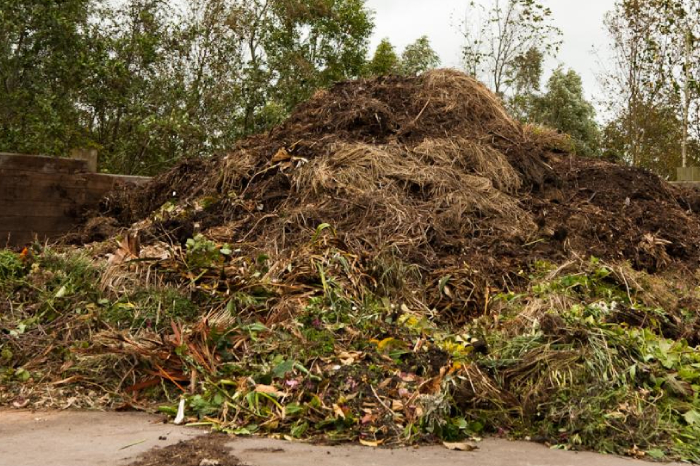
Both start from the same raw material at RM Naples. Yard waste comes into the Naples facility on Basik Drive, gets processed, and comes back out as mulch, compost and organic topsoil. The difference between the finished products is how far the material has broken down and how finely it is processed.
Compost has gone further. It is darker, finer, and biologically active, which is why organic matter improves the soil’s ability to hold water and nutrients when it is worked in. Mulch has not gone as far. It is still recognisably plant material, and that coarseness is the whole point: it is what lets a mulch layer sit there for months instead of melting into the soil in a season.
Mulch vs compost vs topsoil, side by side
Topsoil belongs in this comparison because it is the third pile most people are looking at, and it is the one most often bought by mistake.
| Mulch | Compost | Organic topsoil | |
|---|---|---|---|
| What it is | Coarse ground plant material, still recognisable as wood and leaf | Fully broken down organic material, dark and fine | Screened soil, the structural body of a bed |
| Where it goes | On the surface, never mixed in | Mixed into soil, or spread thin as a top dressing | Underneath, as the bulk of the bed |
| What it does | Slows evaporation, blocks weeds, moderates soil temperature | Adds organic matter, improves water and nutrient holding | Gives roots volume and structure to grow into |
| Price per cubic yard at RM Naples | $10 | $15 | $25 |
Prices verified on the RM Naples purchase station on 6 August 2026. Check the product page for current pricing before you order.
Compost vs topsoil: is compost just richer dirt?
No. In the compost vs topsoil comparison, topsoil is the material a bed is made of and compost is the material you add to improve it. Filling a raised bed with pure compost is a common and expensive mistake: it settles hard, dries into a crust and holds too much nitrogen for many plants. Topsoil is the body, compost is the amendment.
The practical version for a Naples yard: if you need to fill volume, you are buying organic topsoil. If you need to improve what is already there, you are buying compost. If you need both, buy the topsoil in bulk and the compost in the smaller quantity, because you need far less of it.
How much of each you need is a separate calculation. Rather than repeat it here, see our guide on how many bags of mulch are in a yard for coverage math, and the cubic yard weight guide if you are working out what your truck or trailer can legally carry.
Can you use compost as mulch?
You can, but in Southwest Florida it usually disappoints. A surface layer of compost dries out fast under our sun, crusts over, and then sheds water instead of soaking it up. It is also light enough to wash out in a heavy wet season downpour, and a bare compost surface is an excellent seedbed for weeds.
This is where most of the advice online goes wrong for Florida readers. The compost as mulch approach works reasonably well in a cool, damp, overcast climate where the surface rarely dries out completely. It works far less well on a Naples bed getting nine or ten hours of direct sun in June.
There is a version that does work: a thin compost top dressing with mulch spread over it. The compost feeds the soil, the mulch protects the compost, and neither one is being asked to do the other one’s job. That is the two product answer, and it is the reason most Naples yards genuinely need both rather than one.
What is the best mulch for Florida?
The best mulch for Florida is an organic mulch, spread about three inches deep, kept off plant stems and trunks, and chosen from a source that is not stripping sensitive habitat. Florida-Friendly Landscaping, the UF/IFAS program, recommends organic mulches at a 3 inch depth and advises against cypress mulch because it may be sourced from endangered wetlands.
Three things make Florida different from where most mulch advice is written. The growing season never really stops, so mulch is being asked to work twelve months a year rather than through one summer. The UV is intense, which bleaches and degrades surface organic matter faster. And the wet season pushes water and dissolved nutrients straight down through sandy soil, which means the protective layer on top is doing more work here than it would in Ohio.
That combination is why mulch depth matters more here, and why beds need topping up more often than a national gardening article would suggest. It is also why recycled local yard waste is a sensible feedstock: the material is already adapted to this climate and it is not being shipped in from a habitat that should have been left alone.
Why most mulch and compost advice was not written for a Florida yard
Two of the pages currently ranking for this question are British, and that matters more than it sounds. In UK usage, compost usually means a bagged growing medium, closer to what Americans call potting mix. When a UK article says to plant into compost, it does not mean the dark crumbly amendment sold by the cubic yard at a Naples recycling yard. It means a bag of peat based container mix.
If you have ever read a gardening article, followed it exactly, and ended up with a bed that behaved nothing like the article promised, this terminology gap is a likely culprit. The same word is describing two different products.
The rest of the advice gap is climate. Temperate guidance assumes soil that holds water, a dormant winter, and a spring mulching window. Naples has sandy, fast draining, often alkaline soil and a year round growing calendar that runs closer to the opposite of the national one. Read national gardening advice for the principles, then adjust the timing and the quantities for here.
Which is the better use of your money in a Naples yard?
For most Naples yards, mulch first. At RM Naples mulch is $10 per cubic yard and compost is $15, and a three inch mulch layer reduces watering and weeding across the whole property. Buy compost when you are planting something new, amending a tired bed, or top dressing before the growing season.
Put differently: mulch is the cheaper product and it protects the largest area, so per dollar it usually changes more about how your yard behaves. Compost is the more targeted spend. It goes where you are actually growing something and where the soil is measurably depleted.
The one case where that flips is a brand new planting bed. There, compost and organic topsoil come first because there is nothing worth protecting yet, and the mulch goes on afterwards once the plants are in.
Where RM Naples mulch and compost come from
This part is a genuine difference from a bagged product off a big box shelf. RM Naples is a recycling facility first. Yard waste from Naples, East Naples and Marco Island is dropped off, processed on site, and sold back out of the same yard as mulch, compost and topsoil. You can see both ends of that loop on the services page and the yard waste drop off guide for Marco Island landscapers.
The practical benefit is short haul distance and local material. The material in a cubic yard of RM Naples mulch grew in this climate, was cut in this county, and did not travel across the country in a plastic bag. More on the facility and how it operates is on the about us page.
Buying for an HOA, a condo association or a portfolio of properties rather than a single home? The pricing, delivery and scheduling considerations are different. See our guide to bulk mulch and topsoil for HOA and property managers in Naples.
Frequently asked questions
Will mulch turn into compost?
Eventually, yes. Organic mulch breaks down where it sits and the finished material works its way into the soil below. In Southwest Florida’s heat and rain that happens faster than in cooler climates, which is why beds need topping up more often here. While it is still on the surface it is mulch, not finished compost.
What are the disadvantages of mulch?
Piled too deep, mulch can shed rain rather than let it through, and it holds moisture against stems and trunks where it invites rot. Fresh, coarse wood mulch can also tie up nitrogen right at the soil surface. On slopes it floats and washes in heavy rain. Depth and placement fix nearly all of it.
What are the disadvantages of using compost?
Compost costs more per cubic yard than mulch, it does not suppress weeds when left on the surface, and it breaks down and disappears, so it is a repeating purchase rather than a one time fix. Quality also varies by what went into it, so it is worth asking what a supplier’s compost is made from.
What is the 3-3-3 rule for mulch?
The 3-3-3 rule is a rule of thumb: spread mulch about 3 inches deep, extend the ring about 3 feet out from the trunk, and keep it about 3 inches clear of the trunk itself. UF/IFAS Florida guidance agrees on the 3 inch depth but is more cautious on the gap, recommending roughly a foot of clearance around the base of large plants and trees. Never mound mulch up against a trunk, and keep it off palm boots and the base of a palm trunk for the same reason.
Ready to price it out?
RM Naples sells mulch, compost and organic topsoil by the cubic yard for pickup or delivery from 195 Basik Drive, Naples FL 34114. Browse the yard mulch, compost and soil page for current pricing, order through the purchase station, or contact the team at 239-452-2839 if you would rather talk through what your yard needs before you buy.